
Journal · Manufacturing · Technology
How Forged Wheels Are Made
From raw billet to finished wheel: an inside look at the manufacturing process.
Engineering Team · 15 November 2024
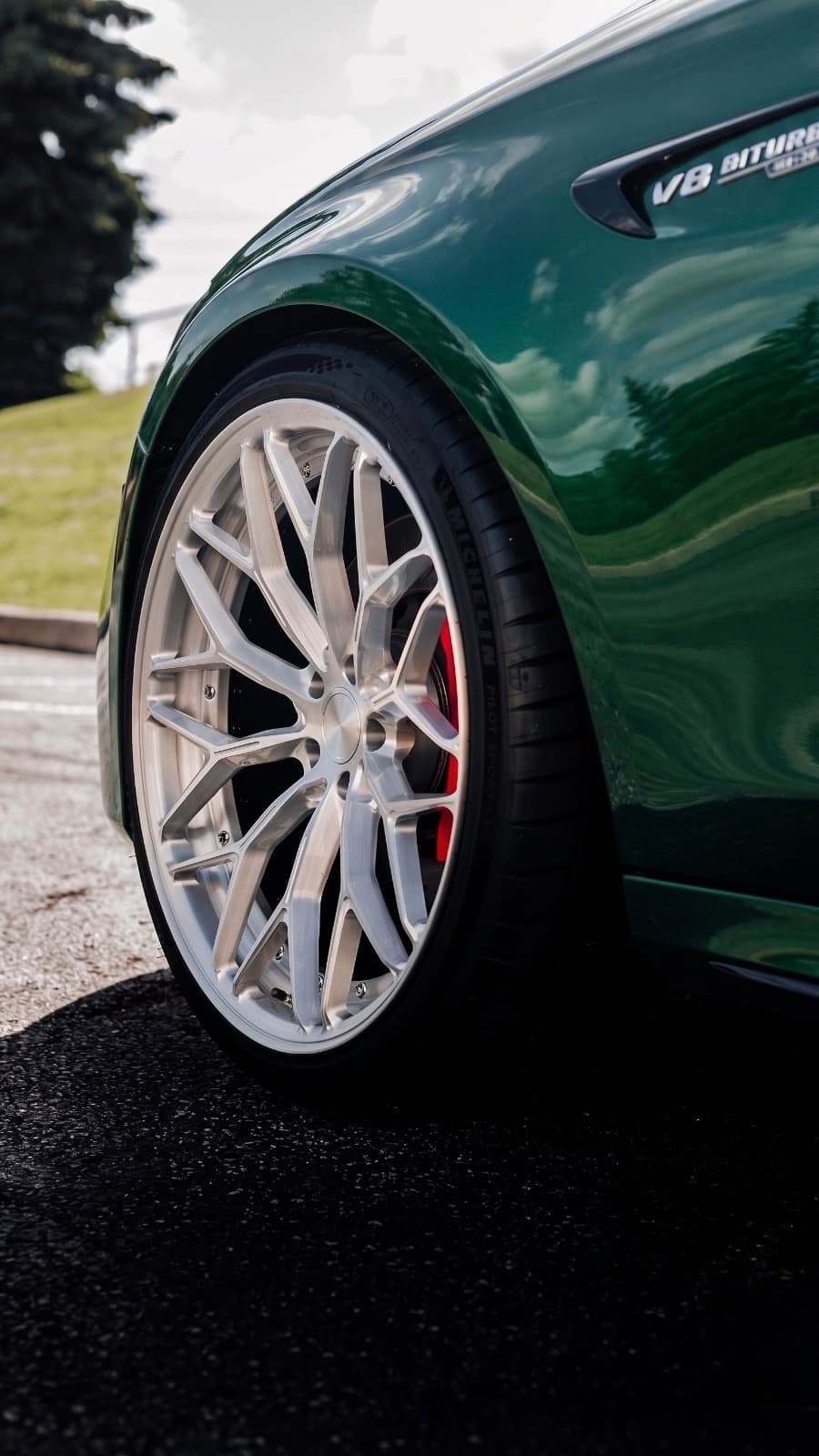
Every DMSTYLNG wheel begins its life as a solid cylinder of aerospace-grade 6061-T6 aluminium alloy: a billet that weighs up to 45 kg before machining removes the excess material to reveal the final form.
The Forging Process
Step 1: Billet preparation. The aluminium billet is cut to precise dimensions and heated to approximately 400°C, warm enough to increase malleability without compromising the crystalline structure of the alloy.
Step 2: Press forging. Under 6,000 tonnes of hydraulic pressure, the heated billet is pressed into the initial wheel shape. This compressive force aligns the grain structure of the aluminium, giving forged wheels their superior strength-to-weight ratio compared to cast alternatives.
Step 3: CNC machining. The forged blank is mounted on 5-axis CNC machines where up to 70% of the material is precision-removed. Our machines work to tolerances of ±0.01 mm.
Step 4: Surface treatment. Depending on the chosen finish, wheels go through polishing, brushing, anodising, or painting. Our in-house paint facility applies up to 8 layers of material for the deepest, most durable finishes.
Step 5: Quality control. Every wheel undergoes dimensional verification, load testing, and a thorough visual inspection before shipping.
Why Forged?
The advantages over cast are significant: 20–30% lighter, up to 3× stronger, and a far superior surface for finishing. For performance applications, there is no comparison.
See the process applied to a set for your own car.
Start your build